become happier... how to do it in a practical way?
What is that, really, happiness? Global research shows that it's true that you're happier when you're physically and mentally healthy;
mens sana in corpore sano.
Pray, believe, or plan for results?
However, praying there doesn't really help, as Juvenalis wrote at the time. Believing in it works better, but to be really sure, it comes with a checklist & a plan - be sure to read the last paragraph!
A checklist for happiness?
In Happiness. The World Book of Happiness, chief editor Leo Bormans, brings together the scientifically based happiness studies of 100 top experts distributed worldwide. The following 8 lucky charms come back very often ;
- Income: enough income to meet basic needs. Afterwards, money quickly becomes less important, for happiness anyway. Being happy with what you have is a lucky charm. What are the sacrifices you make for more?
- Health: feeling physically and psychologically good, working on this and at the same time accepting that it can sometimes be a little less.
- Self-knowledge: know yourself is one of the most important life tasks, according to the Greek questioning philosopher Socrates, among others. What are your talents, your strengths, your sources of strength, what makes you happy, what is your commitment, what are you the expression of, how do you best present yourself ?
- Contribution: meaningful work in which you use and further develop your talents from above, using yourself out of great dedication and connection with, among other things, as a goal;
- Commitment to others: from an ubuntu attitude, unconditionally support the quality of life of others where necessary and not help where it is most effective - wu wei.
- Partner: a satisfying partner relationship, sharing joys and sorrows.
- Other people: quality personal relationships, good connecting friendships at work and in society, individually and in groups, without too many tensions and obligations.
- Meaning: pursuing a higher inspiritual goal, connection with something bigger than yourself, harmony with the environment, nature, the cosmos.
Of course, events on your life path also have an enormous influence. Losing your partner, for example, scores highest on the Holmes-Rahe stress list t.
Yet in psychology, people speak of SUBJECTIVE well-being.
By definition, this means that it depends on how you look at it from your mind and yet also your heart.
 geluk" width="454" height="341">
 geluk" width="453" height="460">
Can you control luck?
According to a number of global experts, happiness comes before...;
- ... 50% off your genetic happiness starting point: your personality, extroverted optimists are usually happier #count -me-in!
- ... 10% of your environment: where you were born, in which family, country, life events, etc., but...
- ... 40% would be feasible, so this is very good news!
Question 1: When you read the above percentages, do you think...
- gosh, there's 60% I can't do anything about or sooner
- wow, 40% self in hand!?
In both, you are objectively right!
Subjectively, however, a completely different world; after all, the extent to which you believe you have an influence - internal locus of control - directly determines whether you free up forces for improvement.

If you feel that you can manage your life - manageability - combined with understanding your life - comprehensibility - and you also give your life meaning - meaningfulness -, this provides a sense of coherence - sense of coherence - that researchers directly correlate to happiness, which in itself promotes resilience and... health. And that's how you have an effect!
By the way, better aware in this way than unconsciously getting used to a possibly not optimal situation.
So where do you consciously focus?
Question 2: how did you, for example, unconsciously or unconsciously think about yourself/your own situation when reading the above 8 lucky charms: income — health — self-knowledge — contribution — commitment — partner — others — meaning? How did you score yourself?
- Do the exercise with the 8 lucky charms again and remember what went less well to wrong or went the past period?
- And now once again with your attention to what went well/is going well?
Do you feel the difference? What you give attention grows! What you look at, you go to.
How do you think you're happy?
There are theories that believe that you can induce happiness with electrical stimulation -d don't try this at home -. Make use of alternative methods until they are ready; think yourself lucky - also a type of electrical brain stimulation, by the way - !
- Believe in & really trust yourself and your personal choice & freedom
- Believe in & really know what you want, focus on this - what you give attention grows
- Believe in & really trust the influence you can have on what happens to you
- Believe in it & trust that everything fits into a bigger picture - rewrite your life story; how you evaluate your life has an impact.
- Believe in & really trust in a positive future
- Believe in and really trust in the strength of positivism - count your blessings
- Believe in & really trust in gratitude, humor, forgiveness & appreciation for yourself and others.
 geluk" width="733" height="501">
In God we trust, all the rest we check... would you rather have a plan?
Do you not believe in beliefs and intentions, rather in concrete action or both? What action will you take for the next period and for your 8 lucky charms: income — health — self-knowledge — contribution — commitment — partner — others — meaning ?
What can help you:
How to go from dream to goal to plan to action and to reality:
read setting goals and taking steps How to turn
your idea into an action plan: already
dismantling time bombs: dividing, estimating and planning!
Or join the happiness workshop with others !
One life, live it & love it!
- If you have a nice anecdote or question about this, send me a message!
- With the FORWARD button below, you can share this blog with a peer.
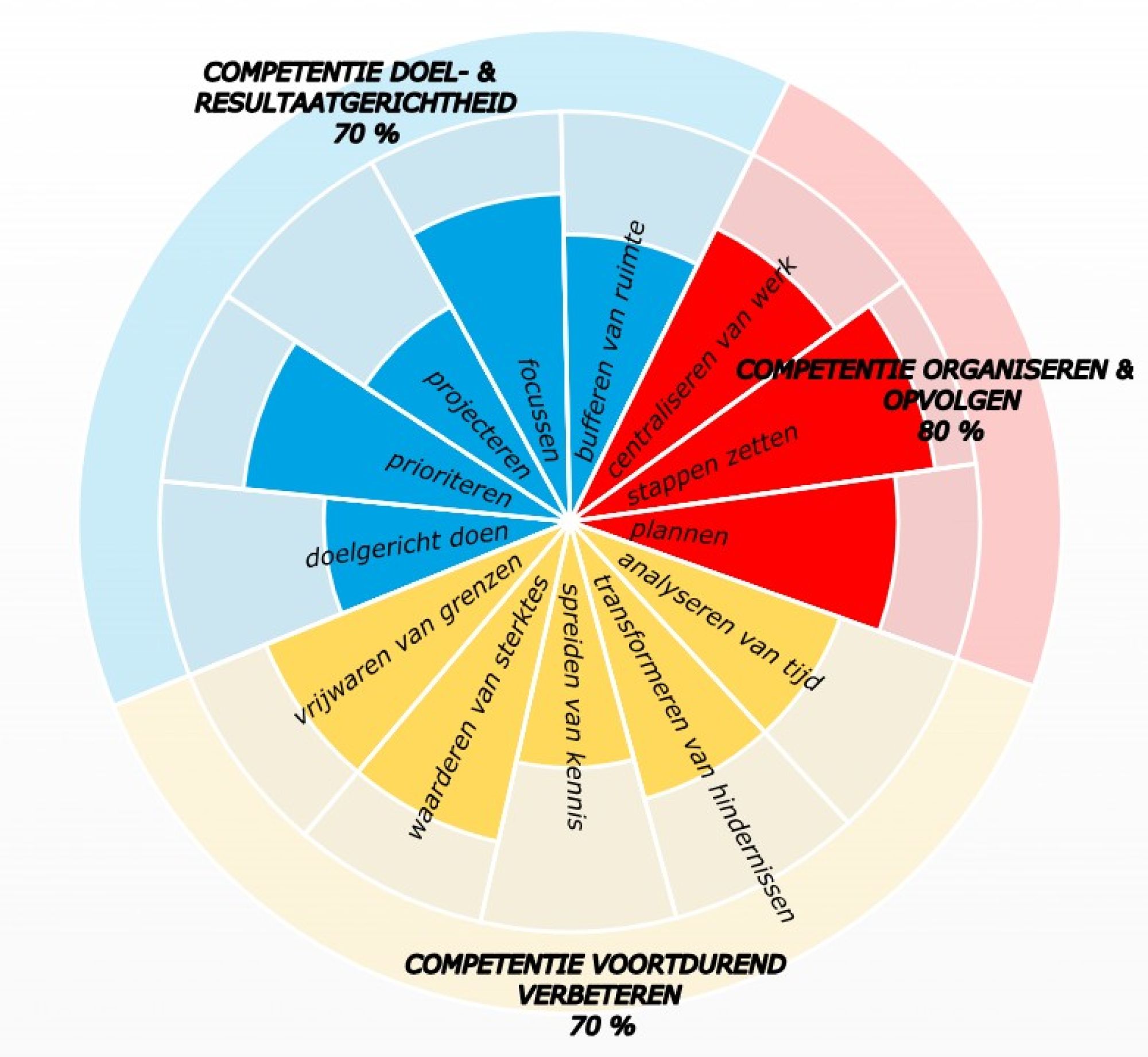
- If you want to score yourself on time competencies, fill out your self-scan!
- If you want to get to know the whole method, read the book GOD - Goal Oriented Doing.
One life, live it & love it!
Your time profile + immediate advice?